Leave Your Message
Choosing the right Ceiling Wall Panels is rarely a simple style decision. Global buyers must examine performance, installation conditions, maintenance, and long-term value. A panel that looks impressive in a showroom may fail in a humid coastal hotel. Another may perform well but create difficult cutting waste on site. Details matter.
Building-science expert Joseph Lstiburek has emphasized, “Buildings should be designed to get wet, but also to dry.” His principle is highly relevant to Ceiling Wall Panels. Moisture resistance, ventilation, joint design, and substrate preparation can determine whether a ceiling remains stable after years of service. Buyers should also check fire performance, acoustic ratings, thermal behavior, surface durability, and documented test standards. Product claims need evidence. A beautiful brochure is not enough.
This guide reviews ten Ceiling Wall Panels for global purchasing decisions. It considers mineral fiber, PVC, metal, wood-look, acoustic, and moisture-resistant options. Each category serves different spaces, from offices and airports to kitchens, retail interiors, and industrial facilities. Installation speed receives attention too. Labor conditions vary widely between markets, and that can change the real project cost.
The ranking is not absolute. A premium panel may be excessive for a temporary fit-out. A low-cost option may become expensive after repeated repairs. That is the uncomfortable part. No single product suits every climate, budget, or building system. We compare practical strengths and weaknesses, while recognizing that supplier transparency can still vary. Buyers should verify samples, certifications, warranty terms, and local installer experience before committing. Small tests can prevent large mistakes.
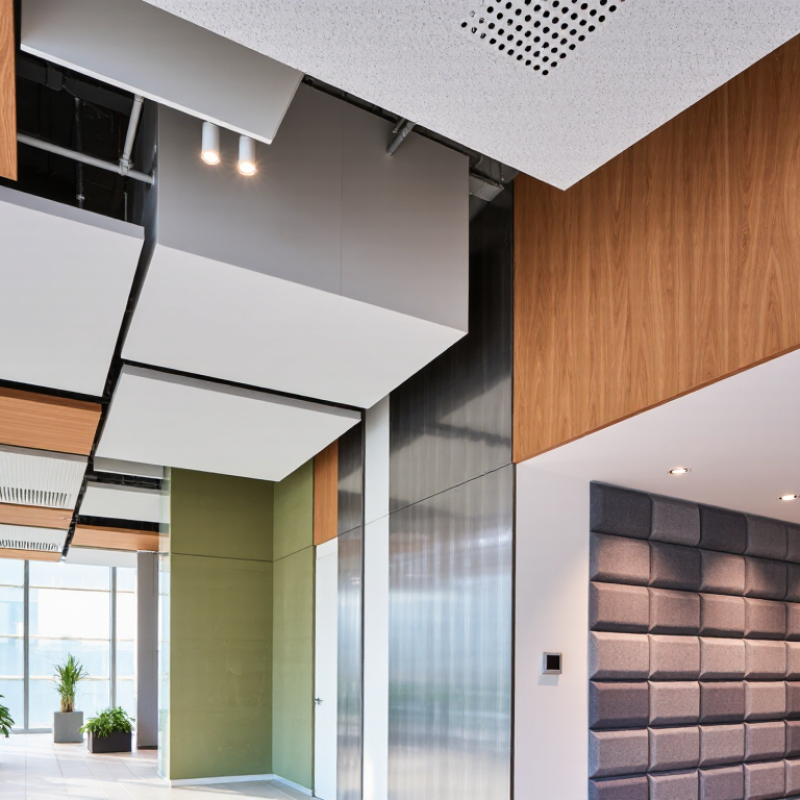
What Are Ceiling Wall Panels and How Are They Used?
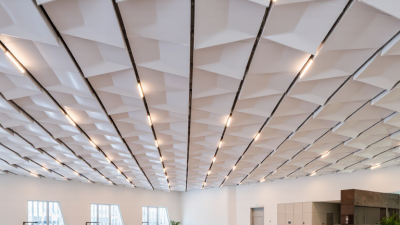
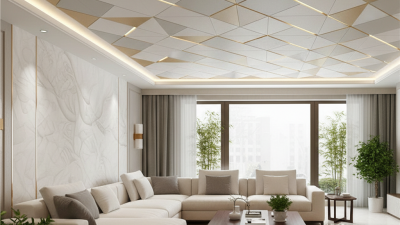
Ceiling wall panels are modular boards installed overhead, vertically, or across both surfaces. The term is imperfect. It can describe acoustic panels, decorative slats, mineral-fiber boards, metal systems, or moisture-resistant composite sheets. Buyers should confirm the exact product category before comparing prices. A ceiling panel may hide services, improve sound control, or create a clean, repeatable surface. A wall panel can protect corridors, divide rooms, or add visual warmth without wet construction.
Installation usually follows a measured grid or concealed framing system. Contractors cut openings for lights, sprinklers, cameras, and ventilation. Removable panels provide access for maintenance. In offices, classrooms, hotels, and healthcare spaces, perforated or fibrous surfaces can reduce reverberation. That detail matters. A beautiful panel may still perform poorly in a noisy room if its acoustic rating is unsuitable. Moist areas require tested resistance to humidity, staining, and microbial growth. Fire classification, formaldehyde emissions, and cleaning requirements also deserve written verification.
The United Nations Environment Programme’s 2023 Global Status Report for Buildings and Construction reported that buildings produced 37% of global energy-related emissions and used 34% of energy demand. Panels cannot solve that burden alone, but lightweight systems may reduce installation waste and support selective replacement. The U.S. Environmental Protection Agency’s Indoor airPLUS guidance also highlights low-emitting materials as an indoor-air consideration. I would not rely on marketing language. Request test reports, installation tolerances, recycled-content evidence, and maintenance records. Small gaps show quickly. So does poor planning.
| Rank | Panel Type | Common Materials | Typical Applications | Main Advantages | Moisture Suitability | Acoustic Performance | Installation Method | Important Buyer Checks |
|---|---|---|---|---|---|---|---|---|
| 1 | Mineral Fiber Acoustic Panels | Mineral fiber, recycled fibers, binders and surface coatings | Offices, classrooms, hospitals, retail spaces and commercial ceilings | Strong sound absorption, good dimensional stability and easy access when installed in a suspended grid | Suitable for standard interior areas; select moisture-resistant grades for humid spaces | High, especially for reducing reverberation and reflected noise | Lay-in or tegular panels placed into a suspended T-grid system | Noise Reduction Coefficient, humidity resistance, sag resistance, cleanability and fire classification |
| 2 | Gypsum Ceiling and Wall Panels | Gypsum core with paper or glass-fiber reinforcement | Interior partitions, flat ceilings, bulkheads and decorative wall surfaces | Smooth finish, paintable surface, non-combustible core and flexible design options | Standard grades are for dry interiors; moisture-resistant grades are used in kitchens and bathrooms | Moderate as a single layer; higher when combined with insulation and multiple layers | Screwed to metal or timber framing, followed by joint treatment and finishing | Board thickness, edge type, fire rating, moisture grade, screw spacing and joint-finish requirements |
| 3 | PVC Decorative Panels | Rigid polyvinyl chloride with printed, laminated or embossed surfaces | Bathrooms, kitchens, utility rooms, retail interiors and budget renovations | Lightweight, water-resistant, easy to clean and available in many surface patterns | High for interior wet areas when joints and edges are correctly sealed | Low to moderate; surface design has limited sound-absorption capability | Adhesive fixing, clips or screws over a prepared wall or ceiling substrate | Fire behavior, impact resistance, thermal expansion, panel thickness, joint profile and indoor-air requirements |
| 4 | Metal Ceiling and Wall Panels | Aluminum, galvanized steel or coated steel | Airports, offices, transport facilities, retail projects, kitchens and industrial interiors | Durable, recyclable, dimensionally stable and available in linear, lay-in and clip-in formats | Very high when the coating and supporting system are suitable for the environment | Low without an acoustic backing; high when perforated and fitted with acoustic fleece | Suspended grid, concealed clips, carrier rails or direct mechanical fixing | Metal thickness, coating system, corrosion category, perforation pattern, edge detail and grounding requirements |
| 5 | Wood and Wood-Fiber Panels | Solid wood, veneer, wood fiber, MDF or particleboard with protective finish | Hotels, restaurants, offices, cultural venues, residential interiors and feature walls | Natural appearance, warm visual character and strong design flexibility | Moderate to low unless specifically treated; avoid prolonged water exposure | Moderate to high when slotted, perforated or combined with an absorptive backing | Clips, battens, concealed rails or mechanical fasteners | Moisture movement, formaldehyde emissions, flame-spread rating, veneer consistency and maintenance finish |
| 6 | Acoustic PET Felt Panels | Thermoformed or cut polyethylene terephthalate fiber, often containing recycled content | Open-plan offices, meeting rooms, studios, schools and hospitality interiors | Lightweight, easy to fabricate, visually distinctive and effective for sound absorption | Generally suitable for dry interiors; not intended as a waterproof lining | High, particularly at mid and high frequencies when thickness and air gaps are designed correctly | Adhesive, clips, magnets, suspension wires or simple mechanical fasteners | Fiber content, acoustic test data, cleanability, colorfastness, flame rating and edge quality |
| 7 | GRG or GFRG Panels | Gypsum reinforced with glass fibers | Decorative ceilings, curved surfaces, feature walls, theaters and public interiors | Can form complex shapes, provides a hard durable surface and supports seamless architectural designs | Suitable for controlled interior conditions; protect from persistent moisture | Low to moderate unless perforated or paired with an acoustic backing system | Mechanical fixing to a designed framing system, with joints finished on site | Panel weight, reinforcement, suspension design, joint treatment, dimensional tolerance and fire documentation |
| 8 | Cement-Bonded Particle Panels | Wood particles bonded with cement and mineral additives | Utility areas, semi-exterior soffits, workshops, service corridors and robust wall linings | High impact resistance, good stiffness and better moisture tolerance than ordinary wood-based boards | Good for covered or intermittently humid areas when correctly detailed | Moderate; density helps reduce transmission, while perforation can improve absorption | Screws or mechanical fasteners fixed to suitable framing | Panel weight, cutting dust, edge sealing, fixing pattern, alkaline resistance and local fire requirements |
| 9 | Fiberglass Reinforced Plastic Panels | Glass fibers embedded in a thermoset polymer matrix | Food-processing areas, commercial kitchens, washrooms, laboratories and hygienic wall linings | Washable, corrosion-resistant, lightweight and suitable for demanding cleaning routines | High when seams, penetrations and perimeter joints are properly sealed | Low as a hard surface; acoustic treatment must be added separately | Adhesive, rivets, screws or panel systems with sealed joints | Food-contact suitability where relevant, chemical resistance, surface texture, fire behavior and joint sealant compatibility |
| 10 | Bamboo and Other Rapidly Renewable Fiber Panels | Engineered bamboo, agricultural fibers or plant-based composite boards | Residential interiors, hospitality projects, offices and sustainability-focused feature surfaces | Renewable material options, distinctive appearance and good design versatility | Varies by resin and finish; use moisture-rated products in humid locations | Moderate; improves with micro-perforation, grooves or an acoustic backing layer | Clips, battens, adhesive systems or mechanical fasteners | Moisture stability, resin emissions, certification documentation, fire performance, color variation and maintenance needs |