request to quote
Leave Your Message

What Is the Best Type of Laminate Wall Panels?

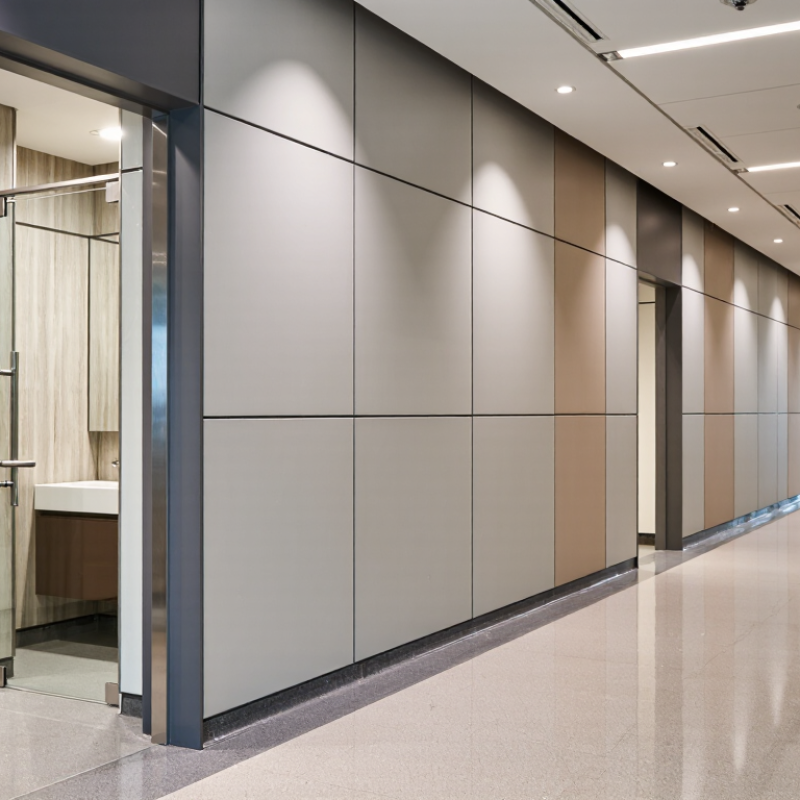
Choosing the best Laminate Wall Panels begins with the room, not the color chart. A busy hospital corridor needs impact resistance, cleanable surfaces, and sealed joints. A hotel bathroom needs moisture control, stable substrates, and carefully protected edges. These details often decide long-term value.

Market evidence supports a careful approach. Grand View Research’s High-Pressure Decorative Laminates Market report identifies continued demand from commercial interiors, healthcare, hospitality, and education. Mordor Intelligence’s Decorative Laminates Market analysis also forecasts steady growth through 2029, driven by durability, design flexibility, and easier maintenance. However, these reports examine broad laminate categories. They do not prove that every wall panel performs equally. That distinction matters.

Richard French, a technical specialist associated with Formica Group, states, “Performance begins with the substrate, not the surface.” It is a simple point, but frequently overlooked. Even an attractive panel can fail over damp drywall, uneven framing, or poorly sealed cut edges. The best selection therefore combines high-pressure laminate quality, a suitable core, verified fire performance, and installation guidance. Look for documented testing, including ASTM E84 where applicable, rather than relying on marketing language. Certifications such as GREENGUARD Gold or an Environmental Product Declaration can also strengthen procurement decisions.

There is no universal winner. Sometimes, the most expensive finish is unnecessary. Sometimes, the cheaper panel becomes costly after one damaged corner. A practical comparison should examine appearance, impact resistance, moisture exposure, repairability, warranty terms, and installer experience. The right Laminate Wall Panels should look convincing on day one and remain dependable after years of cleaning, traffic, and occasional mistakes.
What Is the Best Type of Laminate Wall Panels?

Laminate Wall Panel Types: HPL, TFL, Compact Laminate, and PVC Compared

What Is the Best Type of Laminate Wall Panels?

Choosing the best laminate wall panel depends on moisture, impact, appearance, and installation conditions. HPL, or high-pressure laminate, has multiple resin-treated layers pressed under high heat. It offers strong scratch resistance and suits busy corridors, kitchens, and commercial interiors. However, HPL usually needs a stable substrate, so installation can take more time.

TFL, or thermally fused laminate, bonds a decorative layer directly to engineered board. It is clean-looking, economical, and practical for bedrooms, offices, and dry living areas. Compact laminate is different because it is a solid, dense panel without a separate core. It handles moisture and impact well, but its weight requires careful support. PVC panels are lightweight, easy to clean, and useful in damp rooms. They resist water exposure, yet heat and surface scratching may become concerns. No option is perfect.

Tips: Check the wall condition before ordering panels. Measure around outlets, corners, and door frames. In a bathroom, seal joints carefully and follow the installation instructions. Choose HPL for heavy use, TFL for controlled budgets, compact laminate for demanding areas, and PVC for quick, moisture-friendly upgrades. A common mistake is choosing by color alone. Light panels can show dirt, while textured finishes may collect dust. Reconsider the cleaning routine before deciding.
Core Materials and Density: How 600–900 kg/m³ Affects Panel Strength

What Is the Best Type of Laminate Wall Panels?

Core density strongly influences how laminate wall panels perform. Between 600 and 900 kg/m³, higher density usually improves screw holding, impact resistance, and edge stability. A 900 kg/m³ panel may feel firmer under pressure than a 600 kg/m³ panel. However, density alone does not decide quality. Core material, thickness, moisture resistance, and surface bonding also matter.

In practical installations, medium-density panels can work well for decorative walls with light traffic. Denser boards are often safer in corridors, commercial interiors, and areas exposed to repeated knocks. I have seen dense panels fail when edges absorbed moisture or installers used unsuitable fasteners. That detail is easy to overlook. A strong core cannot compensate for poor support or weak joints.

Tips: Check the technical sheet and independent test data before choosing. Compare density, thickness, screw-pull strength, and moisture performance together. Let panels acclimate indoors before cutting. Seal exposed edges carefully, especially near sinks or cleaning areas. A small sample test may reveal more than a sales description. Also, do not assume the heaviest panel is always the best choice; excessive weight can complicate handling and wall fixing.

Durability Testing: Abrasion, Impact, and Moisture Ratings Under ISO 4586

What Is the Best Type of Laminate Wall Panels?

Durability should be judged by test evidence, not surface appearance. Under ISO 4586, laminate panels are evaluated for abrasion, impact, and resistance to moisture. These tests reveal how a decorative surface may perform during daily use. Abrasion testing measures how many rubbing cycles the surface tolerates before the pattern or protective layer changes. Higher resistance suits corridors, kitchens, and busy commercial interiors.

Impact testing examines the panel’s response to a controlled falling object. A strong result suggests better resistance to dropped tools, luggage, or accidental knocks. However, the panel core and wall installation also matter. A durable face can still crack if the substrate flexes or the fixing method is weak. This is where product comparisons often become incomplete.

Moisture ratings deserve careful attention. ISO 4586 testing can show dimensional change, surface damage, or edge swelling after exposure. It does not automatically make a laminate wall system waterproof. Sealed joints, cut edges, ventilation, and correct adhesive selection remain essential. In practical inspections, I would request the complete test report, not only a rating printed on a specification sheet. Check the tested thickness and construction, too. Results may change between panel formats.

No rating predicts every building condition. A panel that performs well in a laboratory may face harsher cleaning, heat, or repeated impacts on site. That limitation is worth admitting. The best type is the one whose ISO 4586 results match the room’s real traffic, humidity, and maintenance demands.

What Is the Best Type of Laminate Wall Panels? — Durability Testing: Abrasion, Impact, and Moisture Ratings Under ISO 4586

Comparative performance guide for generic laminate wall-panel constructions. Higher abrasion and impact values generally indicate better resistance, while moisture ratings describe visible changes after water exposure. Confirm the final product against its current manufacturer test report and the applicable edition of ISO 4586.

Panel Type ISO 4586-2 Property Test Indicator Representative Result Performance Rating Typical Application Durability Assessment
Standard Decorative HPL on a Stable Substrate Surface wear resistance Initial wear point during abrasive-wheel testing Approximately 350–600 revolutions Good General interior walls, offices, classrooms, retail areas Suitable for normal pedestrian contact and routine cleaning.
Heavy-Duty HPL Wall Panel Surface wear resistance Initial wear point during abrasive-wheel testing Approximately 900–1,500 revolutions Very Good Corridors, public buildings, hospitality interiors, healthcare areas Better resistance to repeated rubbing, trolley contact, and frequent cleaning.
Compact HPL Panel Surface wear resistance Initial wear point during abrasive-wheel testing Approximately 1,500–2,500 revolutions Excellent High-traffic wall protection, transport facilities, commercial interiors Strong wear resistance when the exposed decorative surface is properly specified.
Standard Decorative HPL on a Stable Substrate Resistance to impact by a large-diameter ball Impact height before visible cracking or damage Approximately 100–160 mm Good Low- to medium-traffic interior wall zones Resists ordinary knocks but may require protection in service corridors.
Heavy-Duty HPL Wall Panel Resistance to impact by a large-diameter ball Impact height before visible cracking or damage Approximately 160–200 mm Very Good Schools, hospitals, hotels, retail circulation areas More appropriate where carts, luggage, or equipment may strike the wall.
Compact HPL Panel Resistance to impact by a large-diameter ball Impact height before visible cracking or damage Approximately 200 mm or higher Excellent High-impact public and commercial environments Dense construction provides strong resistance when edges and fixings are detailed correctly.
Standard Decorative HPL on a Stable Substrate Resistance to moisture Visible change after water exposure; rating scale from 1 to 5 Rating 4–5; slight or no visible change Good Dry interior walls and areas with occasional wiping Suitable when joints, cut edges, and the substrate are protected from standing water.
Moisture-Resistant HPL Wall Panel Resistance to moisture Visible change after water exposure; rating scale from 1 to 5 Rating 5; no visible change under the specified exposure Excellent Washrooms, utility rooms, food-service areas, and splash-prone walls Strong surface resistance, but installation detailing remains essential.
Compact HPL Panel Resistance to moisture Appearance after water exposure and dimensional stability of the panel system Rating 5 surface appearance; low moisture sensitivity when correctly sealed Excellent Wet-room wall linings, changing facilities, commercial wash areas Best overall option for demanding moisture conditions, provided joints and penetrations are sealed.
Paper-Faced Decorative Laminate on Standard MDF Resistance to moisture Visible swelling, edge deterioration, or surface change after water exposure Rating 2–3 in exposed or poorly sealed conditions Limited Dry rooms with controlled humidity and no direct splash Not recommended for wet areas unless a verified moisture-resistant system is used.
Any Laminate Panel System Installation-related durability Joint, edge, corner, and penetration performance Depends on sealant, substrate, ventilation, and fixing design Critical All interior wall applications Even a high-rated laminate can fail early if water reaches the substrate or unsupported edges.

How to select: For ordinary interiors, standard HPL generally provides a practical balance of wear, impact, and moisture resistance. For high-traffic areas, choose heavy-duty HPL. For frequent impact, wet-room conditions, or exposed edges, compact HPL is typically the strongest generic option. ISO 4586 results should be compared using the same test method, specimen construction, conditioning procedure, and rating criteria.

Fire Performance: ASTM E84 Flame-Spread and Smoke-Developed Index Criteria

What Is the Best Type of Laminate Wall Panels?

Fire performance should guide laminate wall-panel selection, especially in corridors, healthcare areas, schools, and busy public interiors. ASTM E84 evaluates two measurements: Flame-Spread Index (FSI) and Smoke-Developed Index (SDI). The 2024 International Building Code, Table 803.13, identifies Class A materials as having an FSI of 0–25 and an SDI of 0–450. Class B allows an FSI of 26–75, while Class C allows 76–200. Lower flame spread matters, but smoke performance cannot be treated as a minor detail.

Ask for the complete ASTM E84 report, not a marketing claim. The tested specimen should match the proposed panel, core, adhesive, surface finish, thickness, and installation method. A decorative laminate may perform differently over plywood, mineral board, or a combustible substrate. That detail is often missed. ASTM E84 is a surface-burning test, not a fire-resistance rating for the entire wall. It does not prove structural stability, enclosure performance, or safe evacuation conditions.

In practical review, choose panels with documented Class A results when the project code requires them. Check the report date and laboratory accreditation. Confirm whether joints, penetrations, and edge treatments were included. Real walls are imperfect. Site changes can quietly weaken a tested assembly, so substitutions deserve technical review before installation. Industry guidance from the International Code Council and ASTM emphasizes tested assemblies, yet project teams sometimes rely on the panel name alone. That shortcut needs reconsideration.

Best-Use Selection: Matching Panel Thickness, VOC Class, and Installation Conditions

What Is the Best Type of Laminate Wall Panels?

Best-Use Selection: Matching Panel Thickness, VOC Class, and Installation Conditions

The best laminate wall panel depends on the room, substrate, and installation method. Thin panels, often 3–6 mm, suit smooth, stable walls and reduce cutting effort. They can telegraph dents or uneven joints. Panels around 8–12 mm offer better impact resistance in corridors, classrooms, and busy commercial spaces. They also add weight, so adhesive coverage and mechanical support deserve closer inspection.

Do not treat VOC class as a decorative label. E1 mainly addresses formaldehyde emissions under EN 717-1; it does not describe every volatile compound. For broader screening, request chamber-test results based on ISO 16000-6 or the California CDPH Standard Method. The World Health Organization recommends a formaldehyde guideline of 0.1 mg/m³ over 30 minutes. That figure is useful, but site ventilation and temperature can change actual exposure.

Installation conditions often decide performance. A damp masonry wall can trap moisture behind an otherwise compliant panel. Measure wall moisture, check flatness, and leave movement gaps around edges. In practice, installers sometimes choose thicker panels to hide poor substrates. That is a risky shortcut. Thickness cannot correct condensation or weak bonding. I would also question any “low-VOC” claim without a dated laboratory report, test method, and declared chamber conditions. EPA indoor-air guidance notes that indoor pollutant levels can exceed outdoor levels, sometimes substantially, making material selection only one part of the decision.